

Last Updated:
May 19th, 2026
There have been a lot of scary stories about ketamine in the media recently. Because of this, many people who read the words “ketamine damage” immediately picture the extreme, such as the shrunken bladder and the surgery. But while those things are real and do happen, they come at the end of a process that started much earlier with symptoms nobody paid attention to. The early signs of ketamine bladder syndrome are far less dramatic, which is exactly why they get missed. They look like things that could be caused by something else entirely, and because they come on gradually, it’s easy to explain them away until just stopping ketamine is not enough to fix the harm.
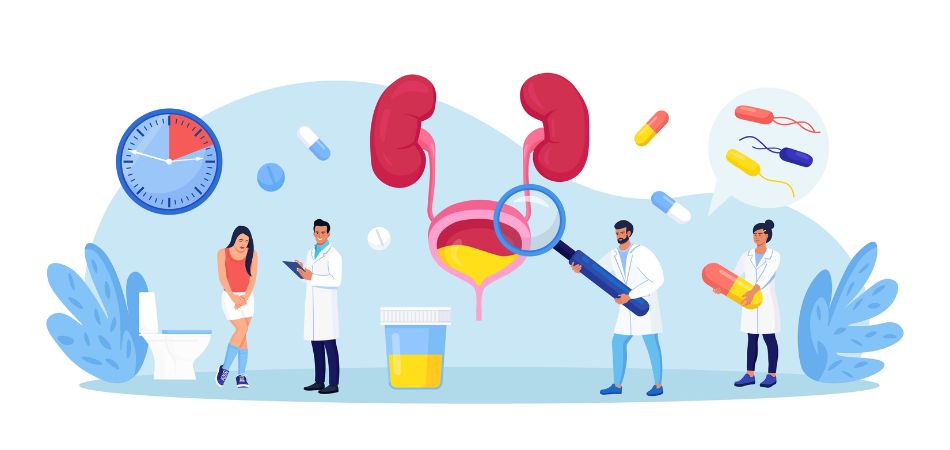
What the early signs of ketamine bladder damage look like
The first thing most people notice is that they’re going to the toilet more often, and that the need to go comes on more suddenly than before. These are the earliest ketamine urinary problems, and they’re easy to overlook at the start. You may need to urinate every couple of hours when you used to go four or five times a day, or get up once or twice a night when you never used to. It feels minor, and most people put it down to a mild infection or don’t even clock that it’s happening.
Next comes what is often described as a burning or stinging sensation during urination. This comes and goes, but it’s often worse after a ketamine session and better after a few days off. Again, it feels like something that will sort itself out, and a lot of people assume it’s just a urinary tract infection or something like that, and either wait for it to pass or take a course of antibiotics from their GP. A lot of ketamine users end up going through several rounds of antibiotics before anyone works out what’s actually going on, partly because urine cultures come back negative for bacteria and partly because neither the patient nor the doctor thinks to ask about ketamine.
A dull ache or cramping in the lower abdomen is another early sign, known in ketamine circles as “k-cramps”. The discomfort at this stage tends to be mild and also comes and goes, with severe pelvic pain only developing later if use continues. You may notice it more after using ketamine and less during the days between, which can help convince you that it’s not serious because it keeps going away.
It’s often only when you put these signs together in someone who uses ketamine that the picture becomes clear. And by the time most people connect the dots, they’ve usually been living with at least some of these problems for months.
Why these symptoms happen
Ketamine’s chemical byproducts are filtered out through the kidneys and end up sitting in the bladder, concentrated in urine, until you next go to the toilet. This is quite unique to ketamine, and it’s why it causes urinary problems when most other drugs don’t. The exposure happens every time you use ketamine, and your bladder lining never gets a chance to fully recover between sessions.
At first, the tissue just becomes inflamed, which is why the symptoms feel identical to a bacterial infection. But with continued use, the irritation goes deeper, and the lining starts to break down and ulcerate. Scar tissue then forms in the bladder wall, which stiffens and thickens so your bladder can no longer expand the way it should. In the most severe cases, the bladder loses over 90% of its normal capacity, which is why someone with advanced damage needs the toilet constantly, sometimes dozens of times a day.
More than a quarter of regular ketamine users develop some form of urinary problems, and the rate is over six times higher than in the general population. These ketamine side effects can have a hugely negative impact on your life, and they get worse the longer ketamine use continues.

Why catching symptoms early matters so much
The single most important thing about ketamine bladder damage is that the early stages are usually reversible. If you stop while the problem is still at the inflammation stage, the tissue can heal, and the symptoms tend to clear up within a month or two.
But the scarring is a whole different story. Once fibrosis sets in, the bladder wall has changed permanently, and the capacity it has lost won’t return. In the worst cases, the damage can spread up to the kidneys, and once that happens, the consequences go well beyond bladder problems. There is even a case of an 18-year-old who went from first symptoms to serious kidney damage in just six months of ketamine use.
How it ends up depends almost entirely on when you catch it. Most ketamine health risks follow this pattern, where the damage builds quietly, and the serious consequences only become obvious after the window for easy recovery has already passed. By the time blood appears in the urine or the pain becomes constant, that window may already be closing.
What to do if you’re noticing symptoms
Telling your doctor is the hardest part for most people. Ketamine use is illegal and still isn’t widely recognised by GPs as a cause of urinary symptoms, which means your doctor may not think to ask, and that makes it your job to bring it up. It can feel awkward, but without that information, your GP is likely to keep prescribing antibiotics for an infection you don’t have. Just remember, your doctor cannot report you for ketamine use, so it’s crucial that you are completely truthful about what you’ve been doing.
Once your doctor knows what’s going on, the tests are relatively straightforward. A urine sample and some blood work will show whether your kidneys are affected, and if the results suggest bladder damage, imaging or a closer look with a camera can tell your doctor how far it’s gone. None of that is pleasant, but it isn’t as scary as it sounds.
But remember, nothing your doctor does will help if you’re still using ketamine. The bladder can only start to heal once the exposure stops.
Getting help to stop
For some people, the bladder symptoms are enough of a wake-up call to stop on their own, and that’s great if it works. But ketamine has a way of becoming a crutch for regular use, whether that’s how you cope with unhappiness, anxiety, boredom, or pain, and unpicking that is harder than simply deciding to quit.
What help looks like depends on where you are with it. If you’re at the earlier end, outpatient support through a local NHS drug service may be enough, giving you someone to talk to regularly and a structure to keep you on track. If you’ve tried that and it hasn’t held, or if your use is heavy enough that you don’t trust yourself to stop at home, residential ketamine addiction treatment gives you space away from the routine that keeps the habit going, with proper therapy built in and a plan for when you leave.
Contact EATA today
EATA can talk you through what’s available to help with your ketamine addiction and what might make sense for where you are right now. The advice is free and confidential, and you don’t need to have made a decision before you call. If you’re reading this because something has started to feel wrong, that instinct is worth acting on while the damage can still heal. Get in touch with EATA whenever you’re ready, and we will discuss all the options available to you.
(Click here to see works cited)
- “Adult Substance Misuse Treatment Statistics 2024 to 2025: Report.” GOV.UK, Office for Health Improvement and Disparities, 4 Dec. 2025, https://www.gov.uk/government/statistics/substance-misuse-treatment-for-adults-statistics-2024-to-2025/adult-substance-misuse-treatment-statistics-2024-to-2025-report.
- Castellani, Daniele, et al. “Ketamine-Induced Cystitis: A Comprehensive Review of the Urologic Effects of This Psychoactive Drug.” Cureus, vol. 14, no. 9, 2022, article e29510, https://doi.org/10.7759/cureus.29510.
- “Ketamine-Induced Uropathy: A Diagnostic Pitfall in an Increasing Healthcare Issue in Youngsters.” Urology Case Reports, vol. 41, 2022, article 101976, https://doi.org/10.1016/j.eucr.2022.101976.
- Middle, Christopher, and Ased Ali. “Ketamine Bladder Syndrome: An Important Differential Diagnosis When Assessing a Patient with Persistent Lower Urinary Tract Symptoms.” BMJ Case Reports, 2015, https://doi.org/10.1136/bcr-2014-207836.