

Last Updated:
March 23rd, 2026
What makes the liver so vulnerable to alcohol?
We all know alcohol abuse can damage the liver but far fewer people understand how that damage actually happens. The science behind it is complex, yet understanding the basics can make the risks feel far more real and tangible.
Below, we break down five key reasons why the liver struggles to cope with alcohol and why it’s especially vulnerable to its effects.
The liver is first in line when you drink
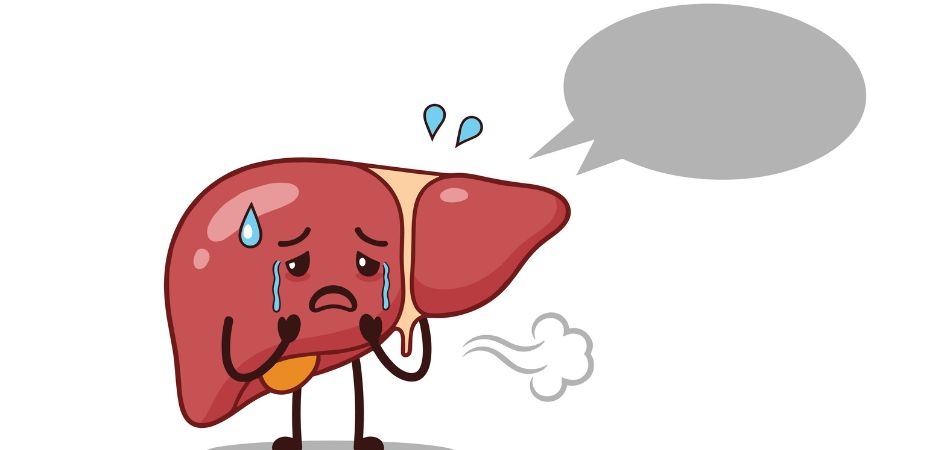
When you drink alcohol, it doesn’t spread evenly around your body in a straight way. It goes from your stomach and intestines directly to your liver, which means your liver takes the first ‘hit’.
Your liver’s job now is to break down the alcohol so it can be removed from your body later on. To do that, liver cells use special enzymes that process alcohol into other substances that are more manageable.
The problem here is that this process exposes the liver to very high concentrations of alcohol and the toxic substances created during the breakdown.
Because the liver is the main processing centre, it carries most of the burden. Other organs are affected but the liver absorbs the greatest chemical stress in those early stages. This is exactly why liver damage can be one of the first major physical consequences of long term, heavy drinking.
The toxic by-product issue
In the last section, we spoke about the toxic substances that are created by the liver to break down the alcohol. This is a substance called acetaldehyde and it’s a chemical that is actually more harmful than alcohol itself.
Acetaldehyde can attach itself to important parts of liver cells, like proteins and DNA within them. When this happens, normal cell function takes a hit as the cells struggle to repair themselves properly. In some cases, the cells can die off altogether, showing just how dangerous this substance is.
If the long term, heavy drinking continues, the liver struggles to keep up with clearing acetaldehyde, which means it will eventually start to build up within the body.
This build up can lead to all kinds of issues including inflammation and scar tissue which slowly changes the structure of the liver.
Alcohol creates chemical stress within the liver
Breaking down alcohol also creates unstable molecules which are known as free radicals. These molecules can damage healthy cells in a process that is sometimes described as oxidative stress.
Free radicals attack the cell membranes in the liver which are important internal structures. While this is happening, alcohol is reducing the liver’s natural protective substances that would normally deal with this damage.
This means the liver is not only under a chemical attack, the continued drinking also lowers its natural defences. The rest of the body responds with inflammation and areas of damage may be replaced with scar tissue. The scarring can be one of the most impactful aspects, as it lowers the effectiveness of filtering toxins and processing nutrients.
The immune system can make the damage worse
When the liver cells are injured by alcohol, the body responds in the same way as it would to any sustained injury. It sends immune cells to the area to try to deal with the problem.
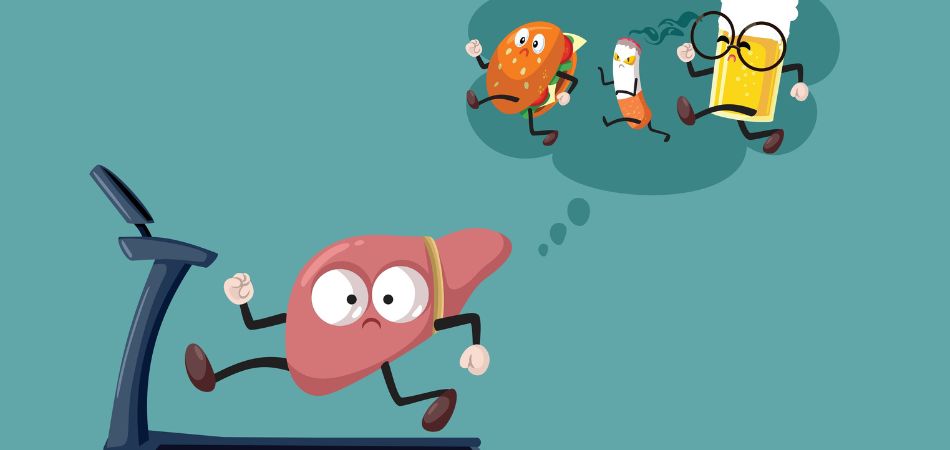
In small amounts, the response is exactly what you want to happen when the body is under attack but it’s a different story if repeated, heavy drinking is in the frame. When this happens, the body assumes it’s under constant attack, which means special immune cells within the liver become activated and release inflammatory chemicals.
But instead of resolving this perceived attack, the ongoing inflammation starts to damage healthy tissues. This causes healthy cells to be lost and instead of the body creating new cells, it lays down scar tissue instead.
Alcohol weakens the gut barrier
While the liver is certainly the first part of the body to get hit, it can also be affected indirectly. Alcohol also affects your gut and heavy drinking can make the lining of the intestines more permeable. This means that substances that should stay inside the gut can leak out into the bloodstream.
Once these harmful toxins enter circulation, they travel straight to the liver for processing and cause further inflammation once they reach there.
So, the liver is already dealing with alcohol and its toxic by-products and now it has to respond to inflammatory signals coming from the gut.
The combined effect increases liver cell injury and speeds up the progression of damage in people who drink heavily.
How can I protect my liver from alcohol abuse?
After understanding how alcohol puts the liver under strain, it’s natural to ask whether anything can be done to reduce the risk. While no amount of heavy drinking is harmless, there are practical ways to lower the burden placed on your liver and give it a better chance of staying healthy.
Below, we break down five protective steps.
I’m worried about my liver but struggling to stop drinking alcohol
If you’re worried about your liver but finding it difficult to stop drinking, that tension can feel heavy. Alcohol can become deeply woven into routines and coping habits, which makes cutting back harder than it sounds. If you’re experiencing consequences yet still feel unable to reduce your intake, that’s an important signal. It may be time to contact EATA and talk through your options.
(Click here to see works cited)
- Liu, S.-Y., Tsai, I-Ting., & Hsu, Y.-C. (2021). Alcohol-Related liver disease: Basic mechanisms and clinical perspectives. International Journal of Molecular Sciences, 22(10), 5170. https://doi.org/10.3390/ijms22105170
- Chandimali, N., Bak, S. G., Park, E. H., Lim, H.-J., Won, Y.-S., Kim, E.-K., Park, S.-I., & Lee, S. J. (2025). Free radicals and their impact on health and antioxidant defenses: a review. Cell Death Discovery, 11(1). https://doi.org/10.1038/s41420-024-02278-8
- Slevin, E., Baiocchi, L., Wu, N., Ekser, B., Sato, K., Lin, E., Ceci, L., Chen, L., Lorenzo, S. R., Xu, W., Kyritsi, K., Meadows, V., Zhou, T., Kundu, D., Han, Y., Kennedy, L., Glaser, S., Francis, H., Alpini, G., & Meng, F. (2020). Kupffer Cells. The American Journal of Pathology, 190(11), 2185–2193. https://doi.org/10.1016/j.ajpath.2020.08.014
- Mackowiak, B., Fu, Y., Maccioni, L., & Gao, B. (2024). Alcohol-associated liver disease. Journal of Clinical Investigation, 134(3). https://doi.org/10.1172/jci176345
- Liver Foundation AU. (2025). Tips – Liver Foundation. Liver Foundation. https://liver.org.au/living-well/alcohol/tips/
- British Liver Trust. (2019). Diet and Liver Disease – British Liver Trust. British Liver Trust. https://britishlivertrust.org.uk/information-and-support/living-with-a-liver-condition/diet-and-liver-disease/