

Last Updated:
March 23rd, 2026
If you’ve been dependent on ketamine for a while, you may have felt tempted to increase your usual go-to dose in order to feel the same effects you once did. On the surface, it can seem straightforward. You take a little more, you feel more and the only thing that really takes a hit is your wallet. But that’s rarely how it plays out.
Increasing your ketamine dose places added strain on your brain and body in ways that aren’t always obvious at the moment. The short-term effects may feel stronger but beneath that, there can be knock-on consequences and hidden risks building in the background
The dangers of increased ketamine usage
In this section, we explore some of the lesser-known consequences that can arise from increasing ketamine use. These are areas many people don’t immediately think about when taking the drug, yet they can develop alongside repeated, high-dose use. By understanding these hidden risks, you can make more informed decisions about what ketamine may really be doing to your body and mind.
Ketamine dependency
One of the most concerning aspects of repeated ketamine use is tolerance. At first, a certain amount may produce the dissociative or euphoric effect you’re looking for but with frequent exposure, your body adapts. This adaptation means the same dose no longer produces the same intensity and as a result, you may find yourself increasing the amount you take in order to recreate the original experience.
That increase places greater strain on both your brain and your body. What may have started as occasional use can gradually turn into a pattern of escalating doses, taken more frequently and in larger quantities.
In some cases, this can lead to physical dependence, which means when you stop using ketamine, you might experience anxiety, restlessness, low mood or abdominal discomfort. The drug has begun to occupy a regulatory role in your body and without it, things can feel unsettled.
As a result, this might mean you take higher doses to chase earlier effects but those higher doses introduce greater risks, both mentally and physically.
Cognitive and psychiatric consequences
Ketamine’s immediate effects can feel disorientating and with heavy, repeated use, those changes can begin to extend beyond the period of intoxication.
Research shows that long-term users can experience memory difficulties and episodes of confusion. You might notice your speech can become disrupted, with some people describing “word blocking,” where finishing a sentence feels unexpectedly difficult.
There is also evidence that prolonged high-dose use is linked with psychotic and dissociative symptoms even when you are not actively using the drug. If you already have underlying vulnerabilities to mood or psychotic disorders, ketamine may worsen them.
Physical health risks of high-dose ketamine
While much of the focus tends to be on ketamine’s psychological effects, the physical consequences of escalating doses are significant.
Higher doses stimulate your cardiovascular system, which increases heart rate and blood pressure. Repeated strain on the heart raises the risk of long-term injury, especially if you already have underlying health concerns.
Your digestive system can also become irritated and many heavy users report severe abdominal pain, sometimes referred to as K-cramps. This pain reflects genuine irritation and inflammation within the gastrointestinal tract.
Prolonged use has also been associated with liver and biliary complications. Some users develop elevated liver enzymes, which can indicate stress or damage to liver cells. In more severe cases, inflammation of the bile ducts has been reported.
In extreme situations, long-term heavy use has been linked to multi-organ dysfunction, where many different organs are affected at the same time.
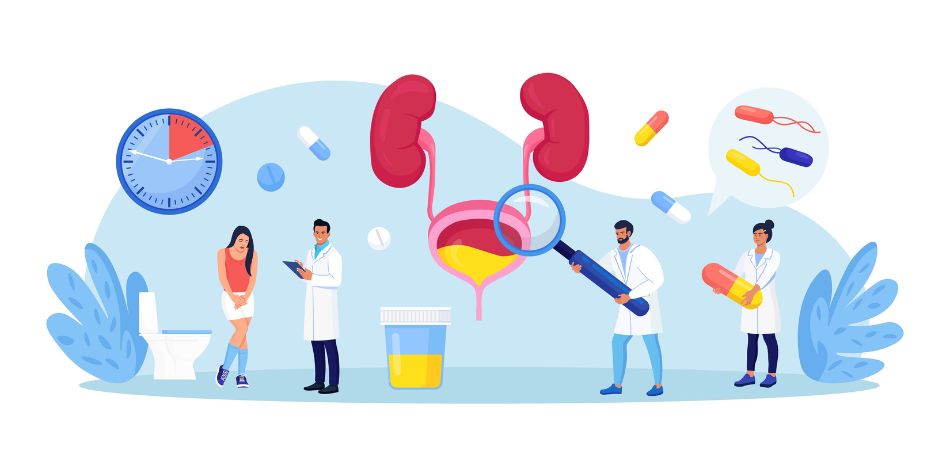
Ketamine’s impact on the bladder
Among the most well-documented physical consequences of heavy ketamine use is damage to your bladder.
Frequent high-dose use can lead to a condition known as ketamine-induced cystitis. This is a painful inflammation of the bladder lining that develops as ketamine and its metabolites are excreted in urine and repeatedly irritate the urinary tract.
You may begin to experience intense urinary urgency and perhaps needing to pass urine frequently. Pain during urination is common and some people notice blood in their urine. The bladder wall can become inflamed and scarred.
As scar tissue develops, the bladder loses elasticity and capacity, which, in simple terms, means it becomes physically smaller and less able to store urine comfortably. In advanced cases, the damage can extend beyond the bladder to the ureters, leading to urinary obstruction and kidney swelling.
If this process continues unchecked, there is a risk of kidney infection or even kidney failure. Some people continue using ketamine to dull the pain caused by the bladder damage itself, which unfortunately worsens the underlying condition.
The earlier you stop, the greater the chance of improvement; however, prolonged heavy exposure can result in permanent structural damage that may require surgical intervention.
The added risk of adulterants in street ketamine
Unlike pharmaceutical ketamine used in medical settings, street ketamine rarely comes with certainty about its contents.
In recreational markets, powders may be mixed with other substances to increase profit margins or alter effects. This unpredictability introduces additional layers of risk for you as the user.
One particularly dangerous adulterant that has been identified in seized samples abroad is fentanyl. Fentanyl is a highly potent opioid and even small, unintended amounts can cause life-threatening respiratory depression. While this specific contamination hasn’t been found yet on UK soils, it doesn’t mean it’s not something to be concerned about.
In fact, there have been concerning reports of ketamine batches in the UK being contaminated with xylazine, a veterinary sedative not approved for human use. Xylazine can significantly slow breathing and heart rate, which compounds ketamine’s own depressant effects on the central nervous system. The presence of xylazine makes illicit ketamine far more unpredictable and increases the risk of serious medical emergencies.
When the contents and potency of a substance are unknown, dosing becomes guesswork. As tolerance rises and larger amounts are taken, the presence of hidden adulterants increases the likelihood of serious medical emergencies.
I’ve been increasing my ketamine dose – What should I do?
If any of what we’ve covered has struck a chord with you, it’s worth taking that feeling seriously. Ketamine isn’t something you want to be increasing or experimenting with in higher amounts. If you’ve found yourself regularly thinking about raising your dose or you already have, that’s a clear sign to pause.
Higher dosages place real pressure on your brain, bladder, heart and cause ketamine induced mental health problems. Each increase carries added risk, even if the effects don’t feel dramatic right away.
If you’ve tried to cut back and found it harder than you expected, that can suggest your body or mind has started to depend on the drug. When that happens, reducing on your own can feel complicated. Specialist support like ketamine detox and ketamine rehab can help you understand what’s going on and put a steadier plan in place.
You can talk to us openly and explore what support might look like for you. There is no pressure to commit to anything, this is simply a chance to discuss any problems you may have been experiencing. When you feel ready, we’re here to listen.
(Click here to see works cited)
- Belal, M., Downey, A., Doherty, R., Ali, A., Hashim, H., Kozan, A., Kujawa, M., Mahreen Pakzad, Rashid, T., Osman, N., Sahai, A., & Biers, S. (2024). British Association of Urological Surgeons Consensus statements on the management of ketamine uropathy. BJU International. https://doi.org/10.1111/bju.16404
- Fregonese, M., Albino, A., Covino, C., Gili, A., Bacci, M., Nicoletti, A., & Gambelunghe, C. (2021). Drug Checking as Strategy for Harm Reduction in Recreational Contests: Evaluation of Two Different Drug Analysis Methodologies. Frontiers in Psychiatry, 12. https://doi.org/10.3389/fpsyt.2021.596895
- Strous, J. F. M., Weeland, C. J., van der Draai, F. A., Daams, J. G., Denys, D., Lok, A., Schoevers, R. A., & Figee, M. (2022). Brain Changes Associated With Long-Term Ketamine Abuse, A Systematic Review. Frontiers in Neuroanatomy, 16. https://doi.org/10.3389/fnana.2022.795231
- Hottat, A., & Hantson, P. (2023). Toxicity patterns associated with chronic ketamine exposure. Toxicologie Analytique et Clinique. https://doi.org/10.1016/j.toxac.2023.02.001
- Pappachan, J. M., Raj, B., Thomas, S., & Hanna, F. W. (2014). Multiorgan Dysfunction Related to Chronic Ketamine Abuse. Baylor University Medical Center Proceedings, 27(3), 223–225. https://doi.org/10.1080/08998280.2014.11929117
- Anderson, D. J., Zhou, J., Cao, D., McDonald, M., Guenther, M., Hasoon, J., Viswanath, O., Kaye, A. D., & Urits, I. (2022). Ketamine-Induced Cystitis: A Comprehensive Review of the Urologic Effects of This Psychoactive Drug. Health Psychology Research, 10(3). https://doi.org/10.52965/001c.38247
- NSW Health. (2026). Cocaine and ketamine may contain the dangerous opioids fentanyl and acetylfentanyl. Nsw.gov.au. https://www.health.nsw.gov.au/aod/public-drug-alerts/Pages/cocaine-or-ketamine-contains-fentanyl.aspx
- Student News Team. (2024, June 5). Drugs warning: Xylazine found in Ketamine in Manchester. Student News. https://studentnews.manchester.ac.uk/2024/06/05/drugs-warning-xylazine-found-in-ketamine-in-manchester/
- NIDA. (2022, April 21). Xylazine. National Institute on Drug Abuse. https://nida.nih.gov/research-topics/xylazine